Kadestone Capital Reports GAAP EPS of -$0.07: What Investors Should Know
Understanding Kadestone Capital Corp.'s Latest Earnings Report
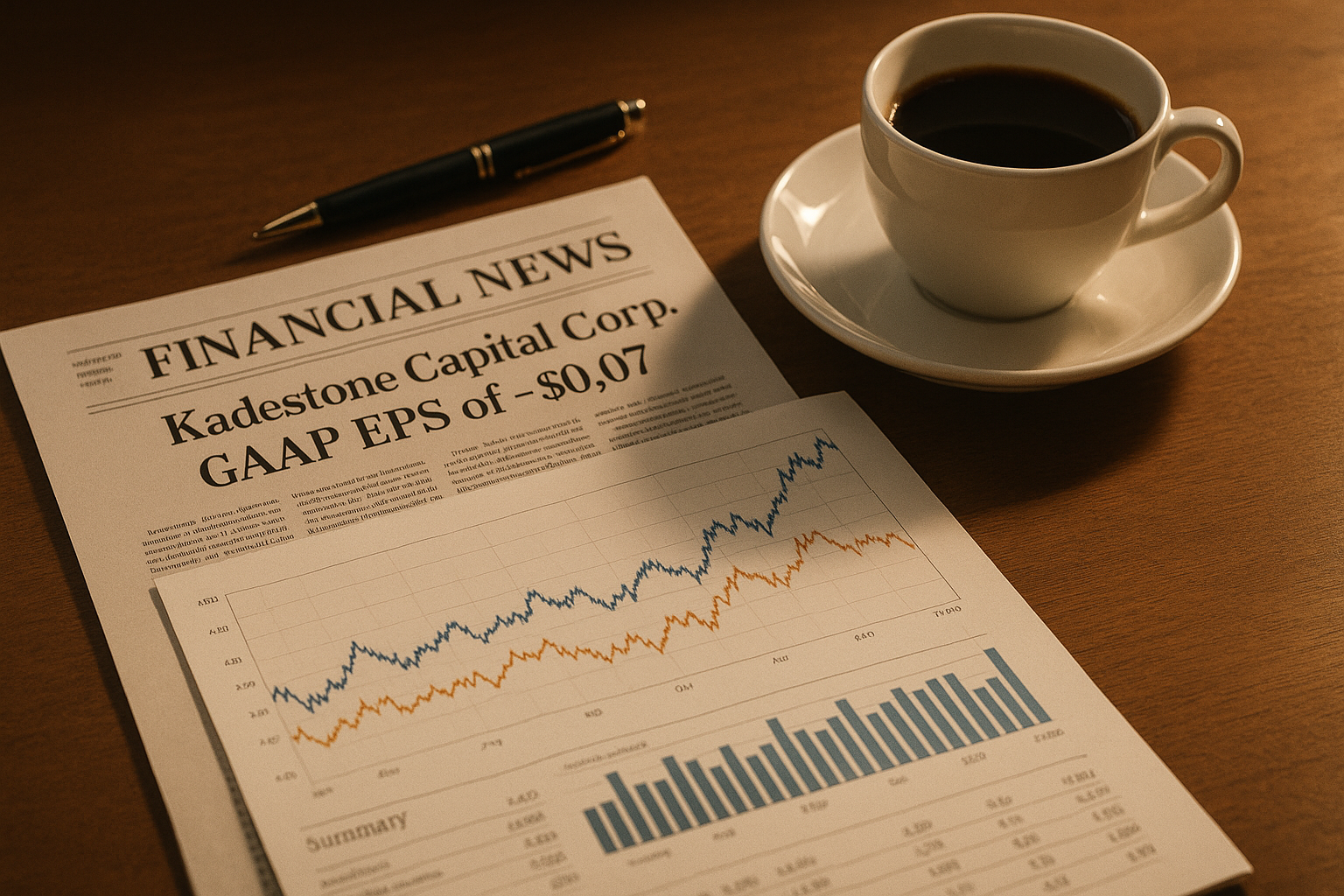
In the ever-evolving landscape of investing, the numbers from a company’s earnings report can hold a mirror to its financial health, offering insights that are critical for both seasoned investors and newcomers alike. Recently, Kadestone Capital Corp. reported a GAAP earnings per share (EPS) of -$0.07, a figure that has raised eyebrows and sparked discussions among market analysts. So, what does this mean for the company, its shareholders, and potential investors? Why should you care?
These figures tell a story of a company navigating through both opportunities and challenges. Understanding the nuances behind this negative EPS is essential, as it not only reflects current performance but also sets the stage for future expectations. In a market driven by sentiment and momentum, every data point matters, and the implications of this report could be significant for both your portfolio and the broader market trends.
Key Developments • Kadestone Capital Corp. reported a GAAP EPS of -$0.07 in its latest quarterly earnings. • This performance marks a decline compared to the previous quarter's EPS of $0.03. • Revenues for the quarter fell by 15% year-over-year, totaling $3.2 million. • The company attributed its earnings dip to increased operational costs and a slowdown in market demand. • Analysts had anticipated earnings of $0.02, leading to a significant market reaction following the release.
Deep Dive Analysis
When we dive deeper into Kadestone's earnings report, the -$0.07 EPS is not just a number; it’s a signal of underlying issues that merit investigation. The company’s revenue decline of 15% year-over-year suggests not just a poor quarter, but possibly a trend that could affect future performance. This drop in revenue—down from approximately $3.8 million in the same quarter last year—raises pertinent questions about both market demand and the effectiveness of Kadestone's operational strategies.
Interestingly, while analysts had projected an EPS of $0.02, the stark reality of a negative EPS not only reflects poorly on the company’s performance but also sends shockwaves across investor confidence. This disparity between expectations and reality serves as a lesson in the volatility of market perceptions. Investors who had anticipated a recovery may now find themselves reassessing their positions.
Operational costs are often the silent killers of profitability, and Kadestone’s report underscores this reality. Increased costs, cited as one of the main reasons for the EPS decline, could suggest either rising input costs or inefficiencies in the company’s operations. For a company that operates within the capital markets, where margins can be razor-thin, managing expenses effectively is crucial.
Let’s pull apart the implications of this drop. A negative EPS can lead to decreased investor confidence, which, in turn, can lead to a sell-off. On the flip side, it may also present a buying opportunity for those who believe in the long-term potential of Kadestone Capital. After all, every setback can also be a setup for a comeback, depending on how the company responds to the challenges at hand.
Market Impact & What It Means For You
So, why should you, as an investor or trader, care about Kadestone Capital's negative EPS? The immediate impact is clear: a decrease in stock price. Following the earnings report, analysts expect volatility in Kadestone's stock price as market participants digest the implications of these results. If you’re currently holding shares, it may be time to reassess your exposure to the company. Consider whether you believe Kadestone can turn things around in the coming quarters.
Conversely, if you’re a potential investor eyeing the company, this could be an opportune time to enter at a lower price point. However, due diligence is paramount. Analyze the reasons behind the negative EPS and assess whether the company has a coherent strategy to address operational inefficiencies and market challenges.
Moreover, the reaction of market analysts and traders in response to this earnings report highlights an essential principle in investing: sentiment can often sway stock prices more than fundamentals. If the sentiment turns negative, it may take time for the company to regain investor trust, creating an environment ripe for short-selling or cautious investment.
The Bigger Picture
In the larger context, Kadestone Capital's struggles can be viewed through a historical lens. Companies often experience peaks and troughs—think of the dot-com bubble bursting in the early 2000s or more recently, the financial crisis of 2008. The market inevitably faces corrections and companies, regardless of their potential, are not insulated from broader economic shifts.
As we reflect on Kadestone's current predicament, it's worth noting that the broader industry may also be facing headwinds. The capital markets sector has experienced fluctuations due to rising interest rates and inflationary pressures, both of which can stifle growth and affect operational costs. Compounding these challenges is the ever-present competition within the industry, creating a battleground where only the most agile companies can thrive.
This context is crucial; it’s not just about Kadestone Capital. The lessons learned here are universally applicable. For instance, if we look at the retail sector in 2020, a multitude of companies faced similar downturns yet emerged stronger after recalibrating their business strategies.
Expert Outlook
Looking ahead, what can we expect from Kadestone Capital? Analysts are divided on their predictions. Some believe that the company’s current troubles could lead to significant restructuring, which may ultimately position it for future growth—if executed correctly. Others, however, warn that if Kadestone cannot streamline operations and adapt to market demands, it may continue to struggle.
One scenario to watch for in the upcoming quarters is whether Kadestone can reduce operational costs effectively. If the company implements a robust cost-cutting strategy while simultaneously finding ways to innovate its product offerings, we may see a turnaround sooner rather than later.
On the other hand, external factors such as economic conditions remain pivotal. Given the potential for a recession on the horizon, Kadestone, like many firms, must navigate these uncertainties carefully. As interest rates continue to fluctuate, the company’s ability to secure funding and manage its debt will be critical.
Frequently Asked Questions
**What does a negative EPS indicate about a company's financial health?** A negative EPS signals that a company is not generating sufficient profits to cover its costs. This can be concerning for investors, as it typically leads to decreased confidence in the company's ability to generate future earnings.
**How can investors interpret an earnings report?** Investors should look beyond the headline numbers. Analyzing revenue trends, expenses, and the company’s guidance for future quarters can provide more context about its financial health and potential for growth.
**What are the risks of investing in a company with negative EPS?** Investing in a company with negative EPS carries inherent risks, including the possibility of continued poor performance, decreased stock price, and potential bankruptcy. It’s crucial for investors to conduct thorough research and assess both the risks and rewards before making investment decisions.
Bottom Line
In conclusion, Kadestone Capital Corp.'s recent earnings report serves as a potent reminder of the volatility and unpredictability of financial markets. A GAAP EPS of -$0.07 raises eyebrows and invites scrutiny, but it also opens the door for opportunities. For investors, the key takeaway is to remain vigilant—observe how the company addresses its challenges and consider positioning yourself accordingly as new developments unfold.
If you want to stay informed about critical financial insights and investment strategies, don’t hesitate to subscribe for more in-depth analyses. The future of investing is fraught with uncertainty, but with the right information, you can navigate these waters successfully.