"Is e.l.f. Stock Set to Soar? Discover Rhode's Impact Now!"

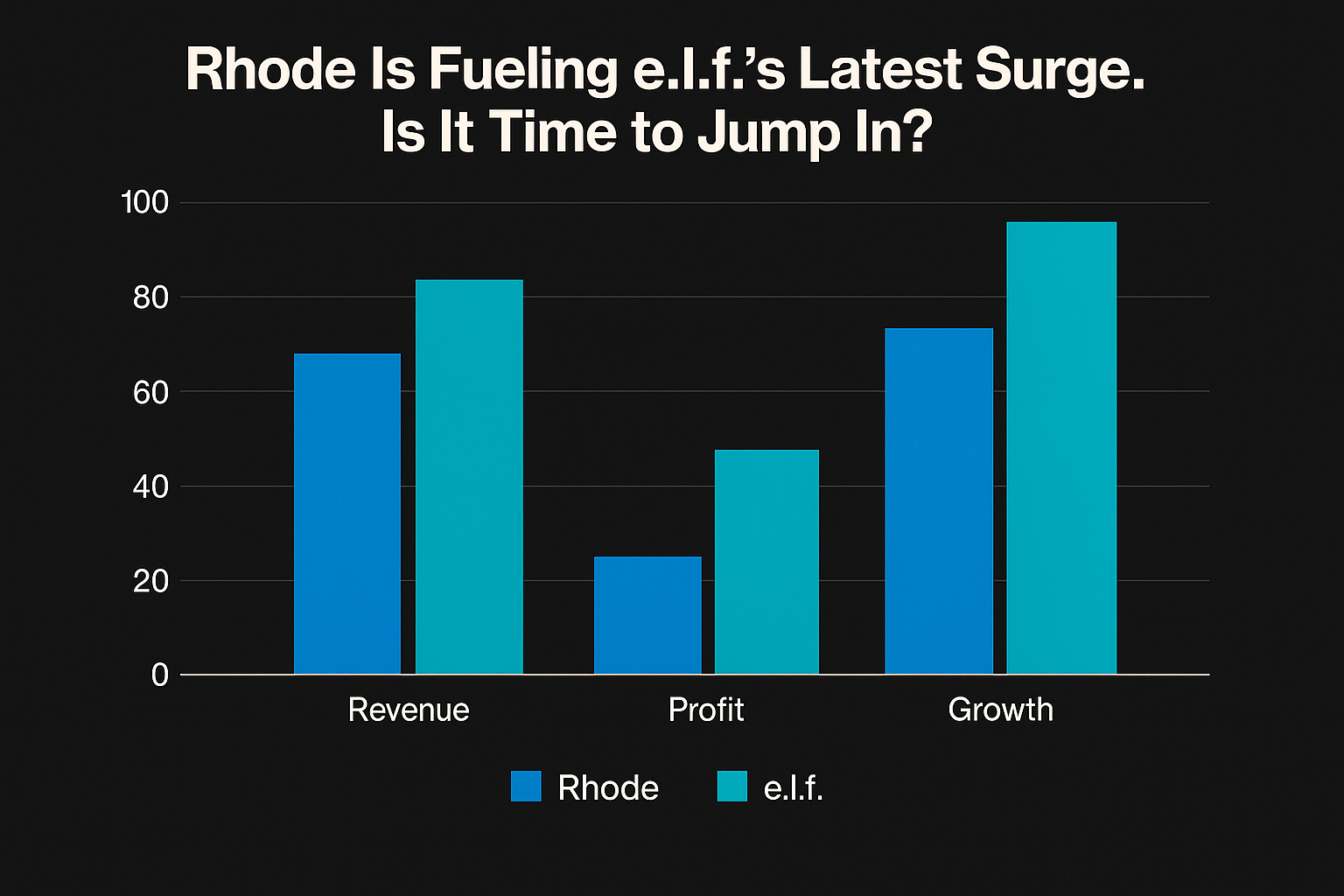
Rhode Is Fueling e.l.f.'s Latest Surge. Is It Time to Jump In?
In the ever-evolving landscape of the beauty industry, few brands have captured attention quite like e.l.f. Cosmetics. With its recent surge in stock prices—driven in large part by a strategic collaboration with Rhode, a skincare line founded by pop sensation Hailey Bieber—the question on many investors' minds is whether this is simply a flash in the pan or a sustainable growth story. The beauty sector, characterized by rapid shifts in consumer preferences and fierce competition, often mirrors broader economic trends, making it essential for investors to examine the underlying factors driving e.l.f.'s recent success.
So, why should you pay attention? For one, e.l.f. is not just any cosmetics brand; it has carved a niche by providing high-quality products at accessible prices. In an era where consumers increasingly gravitate toward brands that resonate with their values—affordability, sustainability, and authenticity—the implications of e.l.f.'s partnership with Rhode could be monumental. This partnership could signal a new age for e.l.f., potentially attracting a younger demographic that is loyal to celebrity-backed brands.
Key Developments
- **Partnership Launch**: e.l.f. announced a collaboration with Rhode, which has seen products flying off the shelves.
- **Stock Performance**: Following the announcement, e.l.f.'s shares surged by over 20% in a matter of days.
- **Market Positioning**: e.l.f. is uniquely positioned to tap into the growing demand for clean beauty products.
- **Consumer Engagement**: Social media buzz around the partnership has amplified brand visibility, particularly among Gen Z consumers.
- **Revenue Growth**: e.l.f. reported a year-over-year revenue increase of 50% in its latest earnings call.
Deep Dive Analysis
To truly appreciate the dynamics at play, let’s dissect the numbers. e.l.f. Cosmetics has seen its revenue swell to approximately $350 million in 2023, a remarkable leap from $230 million just a year prior. This explosive growth is largely attributed to e.l.f.'s savvy marketing strategies and its commitment to inclusivity. The brand has effectively harnessed the power of social media influencers and celebrity endorsements—a tactic that Rhode brilliantly amplifies.
Interestingly, the collaboration with Rhode is more than just a marketing gimmick. It taps into an emerging trend: the fusion of skincare and makeup. According to industry reports, the global skincare market is projected to reach $189 billion by 2025, growing at a CAGR of 4.7% from 2020. Consumers are increasingly seeking products that not only beautify but also nourish the skin, and e.l.f. is well-positioned to ride this wave.
However, let’s not overlook the broader market context. The beauty industry has been navigating significant challenges, including supply chain disruptions and changing consumer preferences post-pandemic. Yet, e.l.f. has managed to thrive amid these challenges, a testament to its agile business model. The company's ability to pivot quickly has allowed it to capitalize on burgeoning trends like clean beauty, where a staggering 58% of millennials now prioritize purchasing products that are free from harmful chemicals and cruelty-free.
Market Impact & What It Means For You
For investors and traders, the implications of e.l.f.'s recent developments are profound. The beauty sector often acts as a bellwether for broader retail trends. If e.l.f. continues to capture market share and expand its product offerings, it's likely to pave the way for other brands in the sector, creating ripples across the market.
So, what does this mean for you as an investor? If you’re considering entering the beauty sector, e.l.f. presents a compelling opportunity. Its stock has demonstrated volatility, but the recent surge indicates strong investor confidence. Analysts project that if e.l.f. maintains its growth trajectory, its stock could see a further 20-30% increase within the next fiscal year.
On the flip side, it's crucial to approach this investment with caution. While e.l.f. has been successful, the beauty industry is notoriously fickle. Consumer trends can shift rapidly, influenced by everything from social media trends to economic downturns. Therefore, diversifying your portfolio and not putting all your eggs in one basket is a prudent strategy.
The Bigger Picture
Zooming out, e.l.f.'s ascent is part of a larger narrative within the beauty industry. Historically, brands that have successfully navigated economic downturns often do so by aligning themselves with consumer values. The rise of e-commerce during the pandemic has irrevocably changed how beauty products are marketed and sold, with online retail now accounting for about 30% of total beauty sales in the U.S.
Moreover, the current economic landscape—characterized by rising inflation and shifting consumer spending habits—makes the case for affordable beauty brands even stronger. As luxury brands struggle to justify their price points, affordable options like e.l.f. may become increasingly attractive. This trend was evident during the last recession, where budget beauty brands outperformed their luxury counterparts.
Interestingly, e.l.f. is also tapping into sustainability, another growing consumer demand. By implementing eco-friendly practices and focusing on clean formulations, e.l.f. may not only attract environmentally conscious consumers but also set a new standard for the industry.
Expert Outlook
Looking ahead, what can we expect from e.l.f. Cosmetics and the wider beauty market? While the partnership with Rhode has brought immediate attention, the real question is whether it can sustain momentum in the long run. Analysts suggest that the beauty sector will continue to see a bifurcation: high-end brands may struggle, while accessible, value-driven brands like e.l.f. could thrive.
Furthermore, keep an eye on consumer behavior as we move into the holiday season. Historically, beauty products see a spike in sales during this time, and with e.l.f.'s strong emphasis on limited-edition releases and collaborations, there’s a potential goldmine waiting to be tapped.
As we enter 2024, several scenarios could play out. On one hand, if economic conditions remain favorable, e.l.f. may continue to expand its market share and introduce innovative products. On the other hand, if inflation further squeezes consumer spending, e.l.f.'s affordability could become both a boon and a curse, as consumers may prioritize essentials over cosmetics.
Frequently Asked Questions
**Is the partnership with Rhode a game-changer for e.l.f.?** Absolutely. Rhode's celebrity backing adds significant clout to e.l.f.'s brand, appealing to a younger audience that values both celebrity influence and quality skincare.
**How should I approach investing in e.l.f.?** Consider diversifying your portfolio to mitigate risks associated with market volatility. e.l.f. appears promising, but as with any investment, it’s wise to keep an eye on broader market trends and consumer behavior.
**What are the risks associated with e.l.f.'s growth?** The beauty industry can be unpredictable, with changing consumer preferences and economic conditions impacting sales. Additionally, increased competition from both established brands and new entrants poses a constant threat.
Bottom Line
e.l.f. Cosmetics stands at a pivotal moment, and its partnership with Rhode could very well be a cornerstone of its future success. As investors, it’s time to consider how this dynamic brand fits into your investment strategy. Keep an eye on emerging trends and consumer behaviors, and stay informed to make educated decisions. If you found this analysis insightful, subscribe for more updates on the ever-evolving world of finance and investments.