Market Volatility Index: What Investors Need to Know
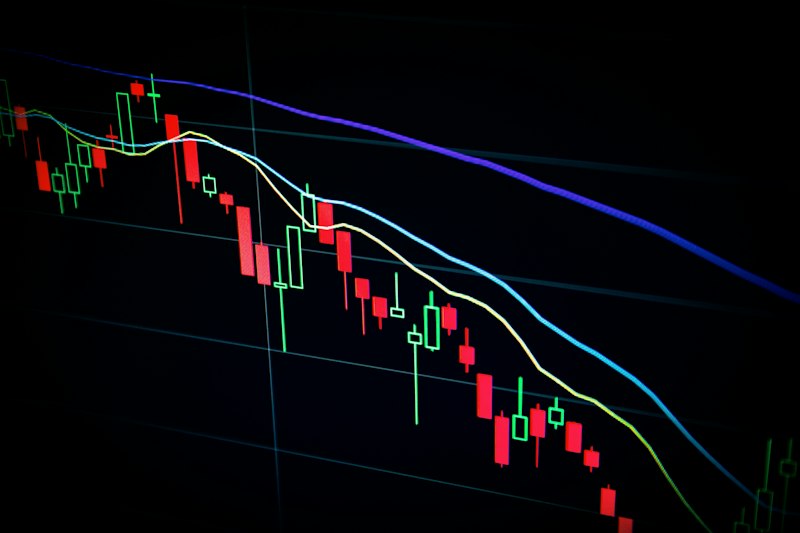
The Market Volatility Index (VIX) plays a critical role in the financial world, often called the “fear gauge” due to its ability to measure market expectations of volatility. For investors navigating uncertain waters, understanding this index is paramount. Let’s dive into what the VIX is telling us about current market conditions.
Understanding the VIX The VIX quantifies market expectations by measuring the implied volatility of options on the S&P 500. A higher VIX indicates greater uncertainty and risk among investors, while a lower VIX suggests a more stable market environment.
- As of late September 2023, the VIX is trading around 27, above its historical average of 20. - This uptick in the index signals that investors are increasingly anxious about market movements.
What does this mean for the average investor?
Interpreting Current VIX Trends An increasing VIX can serve as an early warning sign for market downturns. For instance, historical data suggests that spikes in the VIX often precede significant market corrections.
- The VIX has jumped by 30% over the last month, paralleling rising geopolitical tensions and economic concerns. - During the last bear market, the VIX peaked at 87, illustrating its forecasting ability.
Are we approaching a critical threshold that could indicate a correction?
Sector Impacts: Who is Affected? Different sectors respond uniquely to changes in market volatility. Typically, defensive sectors such as utilities and consumer staples tend to perform better in times of heightened uncertainty, while cyclicals like financials and consumer discretionary may struggle.
- Recent data shows that consumer staples outperformed the market, gaining 5% while discretionary sectors faced declines. - Investors are increasingly flocking to stocks that offer stability in the face of volatility, driving up demand for blue-chip consumer staples.
This sector rotation speaks volumes about investor psychology in uncertain times.
Strategies for Navigating High Volatility When the VIX rises, investors often reassess their portfolios and strategies. Here are some effective ways to navigate a volatile market:
- Focus on defensive stocks that provide stability.
- Consider hedging strategies using options or inverse ETFs to mitigate risk.
- Diversify your portfolio to reduce reliance on any single sector.
These strategies can help cushion your investments against market swings.
Analysts' Forecast: The VIX and Market Direction Analysts are closely monitoring the VIX for trends that may foreshadow market direction. Many anticipate that as long as the VIX remains elevated, the stock market will face continued pressure.
- Some predict that the VIX may temporarily spike to 35, particularly if economic indicators reveal deeper weaknesses. - Conversely, a drop in the VIX below 20 may signal recovery and renewed investor confidence.
What should be the key takeaway for investors watching the VIX?
Frequently Asked Questions
**What does a high VIX indicate?** A high VIX indicates increased investor fear and expectations of significant market volatility, often foreshadowing corrections.
**How can investors use the VIX to inform their strategies?** Investors can use the VIX to gauge market sentiment and adjust their portfolios accordingly, often leaning towards defensive investments during spikes.
**Is the VIX a reliable predictor of market direction?** While the VIX can provide insights into market sentiment, it is not foolproof and should be used in conjunction with other indicators for a more comprehensive analysis.